
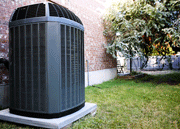
 Keeping your air conditioner clean and properly maintained is a key way to prevent mold from developing in your A/C system. The natural condensation and moisture produced by your air conditioner can turn the equipment into a breeding ground for mold growth. Mold can be hazardous, especially for people who suffer from allergies, asthma or other breathing ailments. To keep your air conditioner in top shape, be sure to schedule annual HVAC maintenance and follow these simple DIY tips. A clean air conditioning environment is your best line of defense against mold development.
New Haven , mold , indiana , Drip Pan , A/C , dust-free environment , top shape
 During humid and hot Indiana summers, you'll want to get the most out of your air conditioning system. However, the configuration of your home might make this difficult, particularly if you have large windows, multiple floors or room additions. Often, the area immediately around the thermostat will be at a comfortable temperature, while the rest of the house might be uncomfortably hot or cold. The best way to address this common problem is to install a zoning system.
 Air conditioner troubleshooting comes in two flavors: The easy stuff you can do yourself and the
  Reducing your home's
  Sleepless nights, interrupted conversations and angry neighbors ... what do all of these things have in common? They're all caused by that awful noise your air conditioner's making. Though you may have tried to ignore the racket, it's important that you find the underlying cause of the noise your air conditioner's making, both for your system's and your own good.
 When
When  Most homeowners aren't aware that they can perform their own energy evaluation on their homes. In tough economic times like we're experiencing today, it's important to save money every way possible. If you're not sure whether you're doing everything you can to keep energy costs low, here are a few tips that will help ensure your family stays comfortable, while you enjoy savings on utility costs.
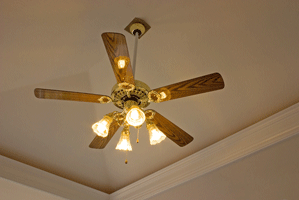 Air conditioning your home can be quite expensive when it requires constant cooling during the summer. Constantly relying on your air conditioner uses up a lot of energy, as well as wearing out your A/C. However, you can reduce your air conditioning costs by installing and using ceiling fans in your Indiana home. They provide a perfect complement to the cooling done by your A/C.
 If your home has air leaks, you're throwing away your hard-earned money in unnecessary energy costs. Air leaks allow for the cooled or heated air to escape and the outside air to leak in. To compensate for the air loss, you adjust the thermostat, which increases the amount of energy used, thus increasing your utility bill. To stop this costly cycle from repeating itself, locate and seal air leaks in your home, reducing energy costs while creating a healthier and more comfortable home.
 By keeping your home clean, you also help keep your indoor
 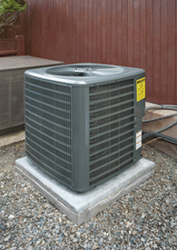 If you've been considering buying a heat pump for your home heating and cooling needs, you've probably already found out how efficient these systems can be. As heat pump technology improves, new features get added to these systems. Here are some of the advanced functions and features you can look for when choosing among available heap pumps.
 Installing a geothermal heat pump in your home is a high-quality investment in energy efficiency. For homeowners who want to make the switch to geothermal heating and cooling, there are substantial energy tax credits available from the federal government to help fund the purchase of a geothermal system.
 When you shut off your appliances, electronics or other energy-consuming devices, you might think they're no longer using power. Turning off lights and equipment you aren't using is definitely a good energy-conservation measure, but even when switched off, if they're plugged in, computers, televisions, refrigerators and other electric devices are still consuming a small bit of energy, known as standby power.
 With our warm spring, you've probably already turned on your air conditioner this year. Did it perform as well as you expected it to? If not, it may be time to repair or replace your old equipment. Buying a new air conditioner is certainly a big investment, so you want to make sure you get the most from your existing system. However, that old air conditioner could be costing you more money than you know. Ask yourself the following questions when deciding whether to repair or replace your air conditioner:
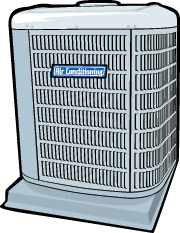 While your central air conditioner produces cool air out of sight — usually in the attic or a closet — the coils in your A/C unit are busy producing something else: Water, and lots of it. Serious water damage can result from condensation that forms naturally on the evaporator coils. A central air conditioner may produce a surprising 5 to 20 gallons of water per day — especially during a humid Indiana summer. In a properly maintained system, the condensate collects in a drip-pan beneath the air handler and drains through a hose connected to your sewer system. If the drain system fails, or the evaporator coils produce more condensate than the drain can handle, gallons of water could silently damage your house before you’re even aware of it.
