★ ★ ★ ★ ★
"Our technician arrived as scheduled, was courteous at the door and asked if it was OK to come into the house, after which he put his booties over his work shoes. He (I wish I knew his name) seemed to complete his tasks efficiently, cleaned up his workspace and gave a thorough rendition of the condition of our AC unit. I appreciated his work and glad that we had the service contract. Great Job!"
— Michael R.
(Google Review)
★ ★ ★ ★ ★
"Hartman Bros representatives are wonderful! Caleb is super great at answering all my questions and explaining everything so I feel very much at ease. I definitely recommend Hartman Bros for heating and AC installation and servicing. Their employees are super polite and very helpful and pleasant! Great job as always!"
— Renee C.
(Google Review)
★ ★ ★ ★ ★
"Caleb serviced our system for the annual spring checkup. He was professional, polite and gave us pointers on the system."
— Diane D.
(Google Review)
★ ★ ★ ★ ★
"Very courteous and professional. They always take great care of us."
— Chip S.
(Google Review)
★ ★ ★ ★ ★
"Technician (Jim) performed biannual maintenance. Very thorough. Answered questions, explained how to utilize controls to optimize performance. Can’t imagine a better experience."
— Joseph Muhler, II
(Google Review)
★ ★ ★ ★ ★
"Very polite and fast. in and out in less than an hour."
— Edgar T.
(Google Review)
★ ★ ★ ★ ★
"A technician came out to perform an annual service call on air conditioning/heat pump. He also made a minor adjustment to thermostat programming . He was prompt and efficient and discussed future maintenance regular service options."
— Judith Botts
(Google Review)
★ ★ ★ ★ ★
"Hartman Brothers responded within hours of our furnace going out and gave us several options. They are always courteous and knowledgeable. We have done business with them for 20+ years."
— Mindy Meyer
(Google Review)

 Your heating system, cooking equipment, and any other appliance that burns fuel create carbon monoxide (CO). Normally, this toxic gas is safely vented outside. A CO leak can be lethal, making it necessary to have a carbon monoxide detector in your home. While manufacturer's instructions for CO detector placement vary, there are some general rules you should remember.
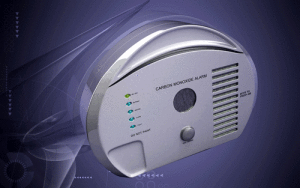 When you turn on your fuel-burning heating system for the fall, you have a reasonable expectation that it will operate safely. However, some unforeseen issues could occur that might make your gas or propane furnace a potentially deadly risk. To prevent this danger, you need a
 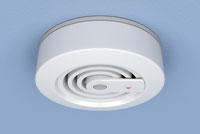 Carbon monoxide (CO)–a colorless, odorless, poisonous gas–is produced by the appliances you use in your home every day. Anything that burns fuel, such as a gas-fired furnace or water heater, produces carbon monoxide as a
  Carbon monoxide is an odorless, tasteless, invisible gas that is produced in exhaust from vehicles, gas furnaces, stoves, wood fires and other appliances that work by combustion. Unfortunately, CO can be very hazardous to humans and animals, and, in fact, causes hundreds of accidental deaths in the United States every year. Since it can't be detected by sight or smell, how would you know if you'd been exposed to carbon monoxide?
 Keeping yourself safe from carbon monoxide exposure involves doing what you can to reduce and eliminate carbon monoxide (CO) from your home. In order to do this, you need to understand where carbon monoxide comes from, and how to properly deal with it in a way that stops any existing leaks, and prevents new ones from occurring.
